What Restaurant Cooks Know About Knives That We Don't
Professional cooks chop for hours a day without fuss. Most of their tricks have nothing to do with expensive knives and everything to do with habits.
Watch a line cook prep vegetables and it looks effortless: fast, even, and somehow no one loses a fingertip. Their knives often aren't fancy. What sets them apart is a set of habits that any home cook can borrow.
A sharp knife is the safer knife
It sounds backwards, but dull knives cause more accidents. A dull blade needs more force, and it skids off the skin of a tomato or onion instead of biting in. That slip is where cuts happen. Cooks keep their knives sharp precisely because it's safer.
They hone before every shift
Most professional cooks give their knife a few strokes on a honing steel before they start, and often during service too. Honing doesn't remove metal. It straightens the edge, which bends slightly with use. Done regularly, it means the knife needs real sharpening far less often.
They use the claw grip
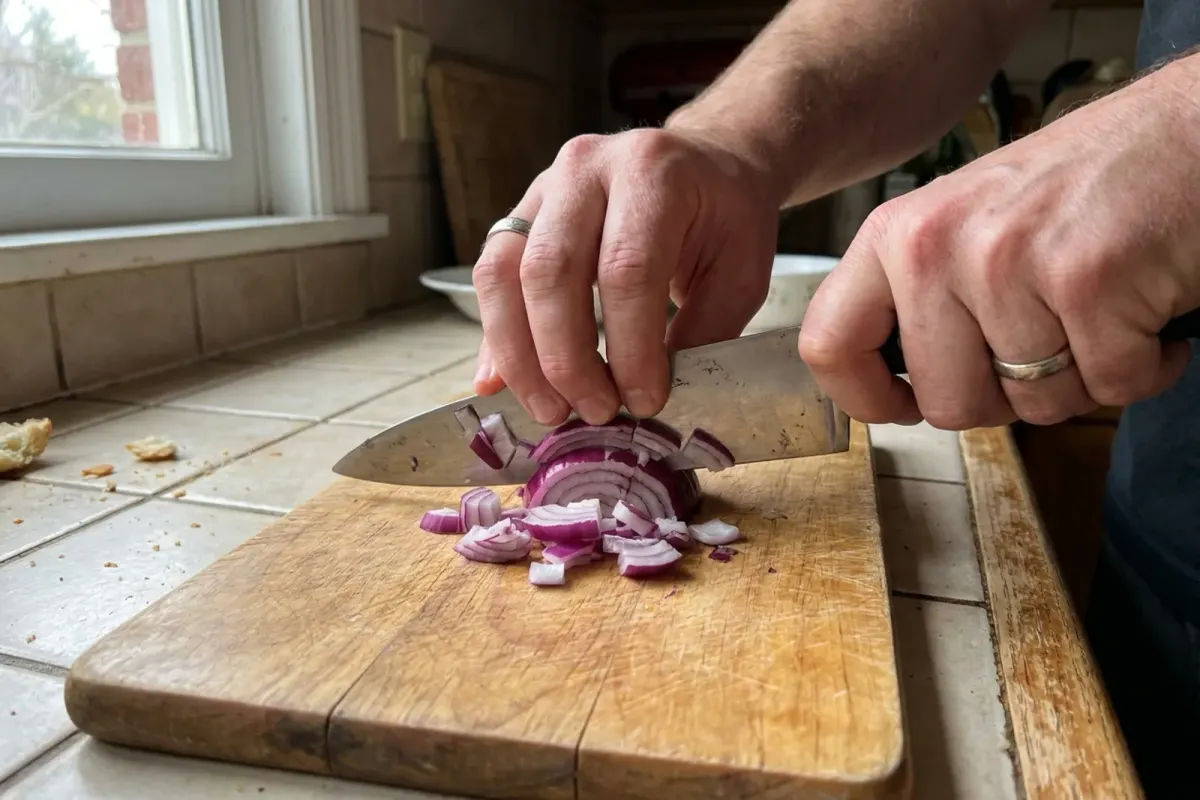
The hand holding the food curls its fingertips under, so the knuckles face the blade and the fingertips stay tucked away. The flat of the knife can rest lightly against the knuckles as a guide. It feels slow at first, but it's how cooks chop fast without looking down at their fingers.
They let the board do its job
They anchor the board. A damp cloth or a sheet of damp paper towel under the cutting board stops it from sliding around. It's one of the simplest safety tricks in any kitchen.
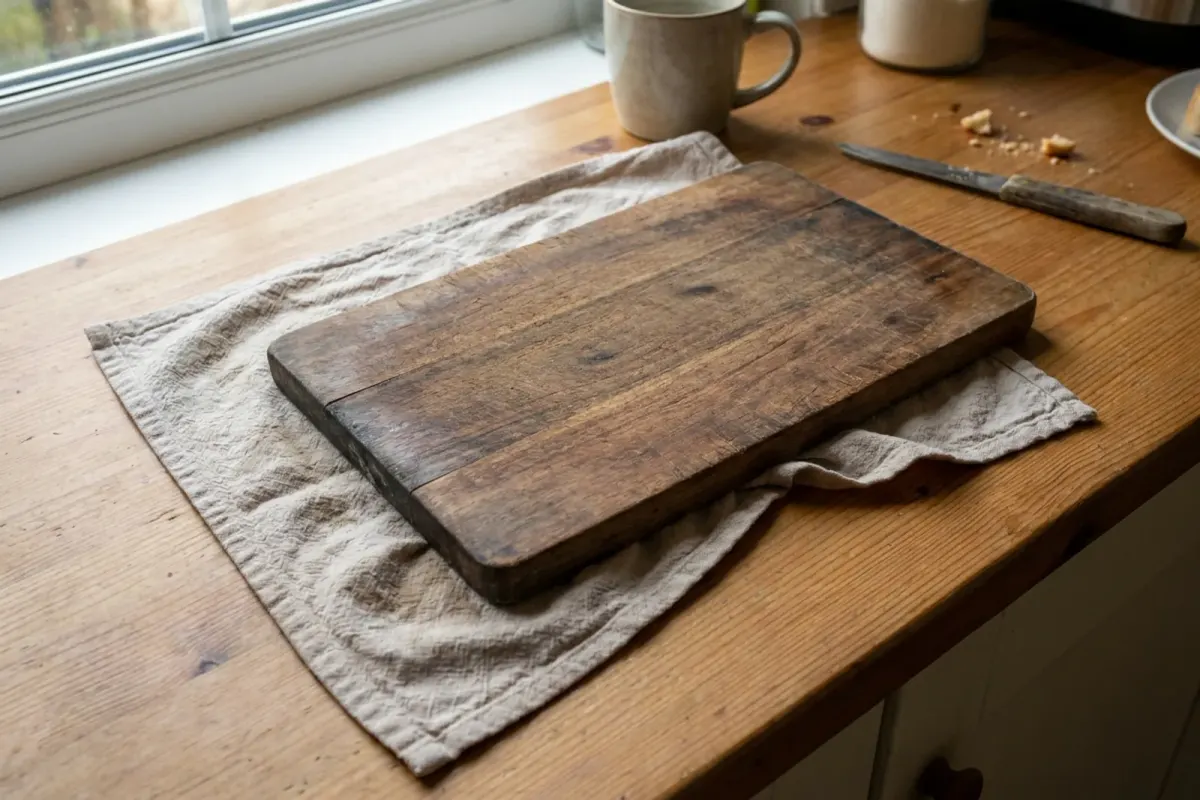
They clear the board with the spine. Scraping chopped food off the board with the sharp edge drags it sideways and dulls it fast. Cooks flip the knife and use the back of the blade instead.
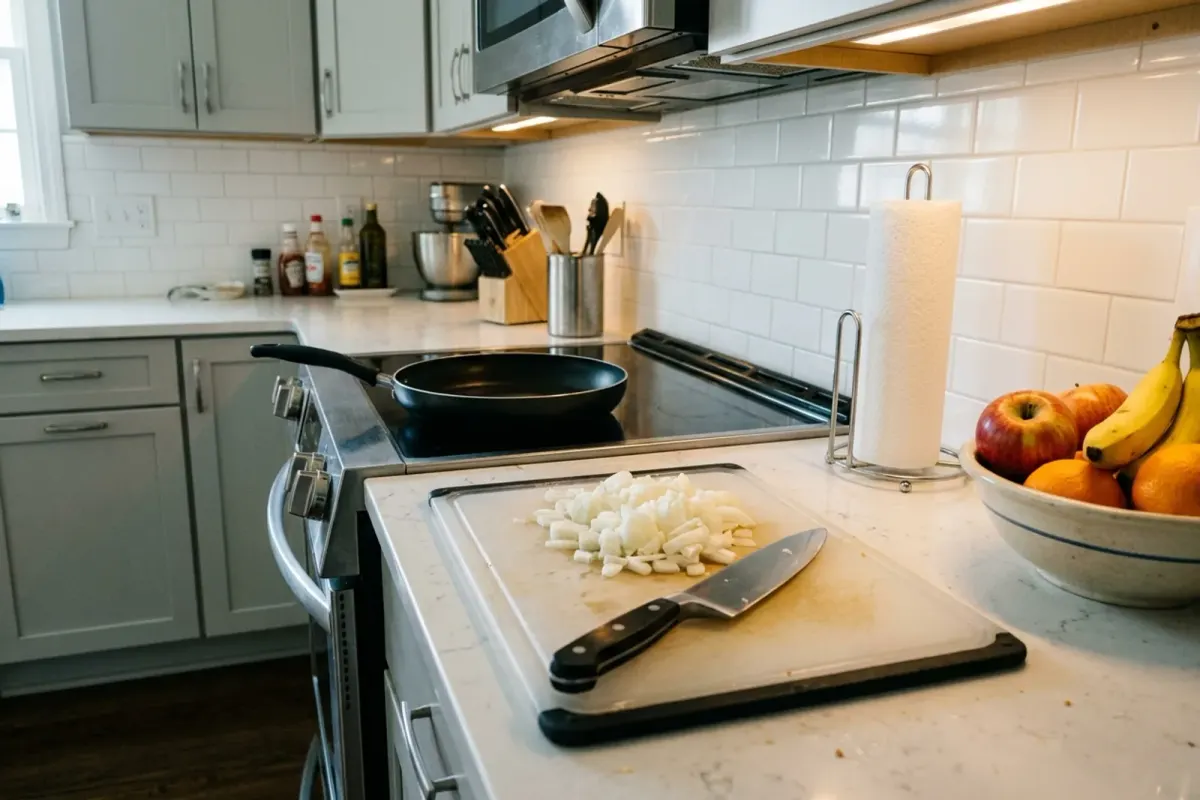
They give themselves room. A bigger board means less food falling off and more space to work. Small boards make for cramped, awkward cutting.
They mostly use one knife
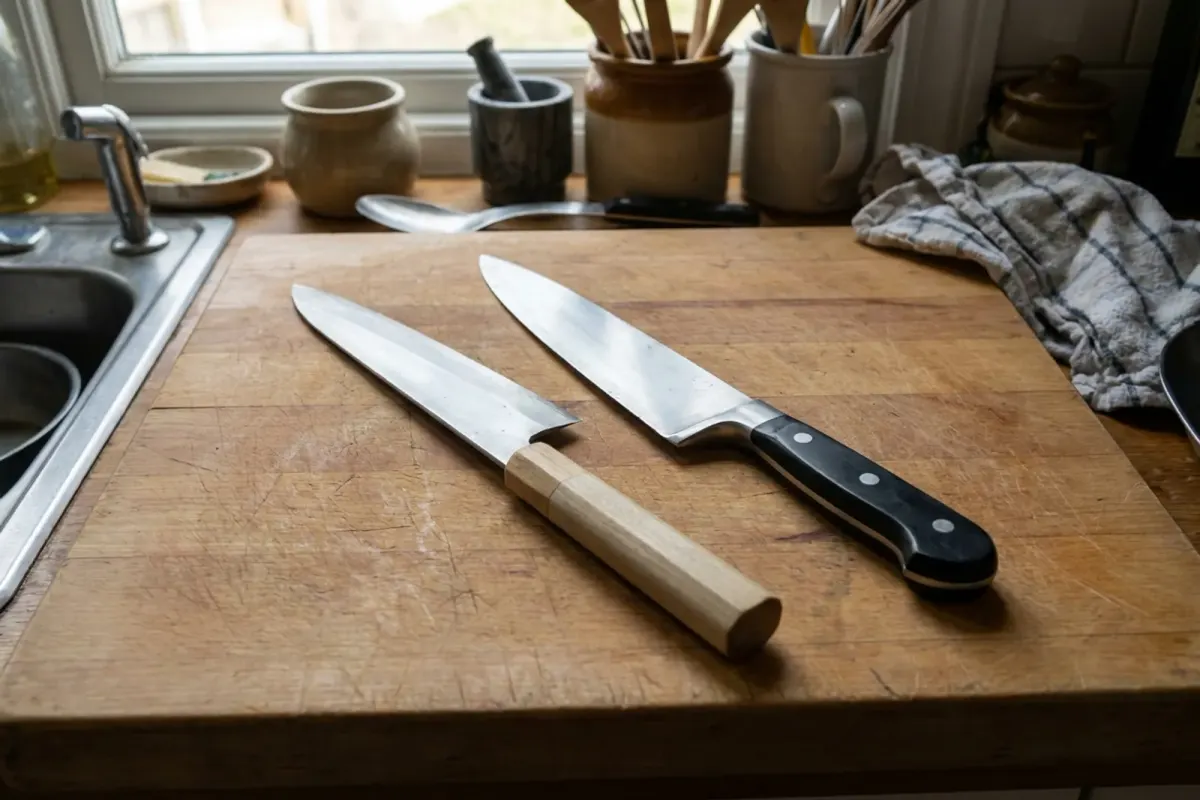
Ask a cook which knife they use most and the answer is almost always the chef's knife, for chopping, slicing, mincing and smashing garlic. A paring knife and a serrated bread knife cover most of the rest. A big block of rarely used knives is a home-kitchen habit, not a professional one.
They never leave a knife in the sink
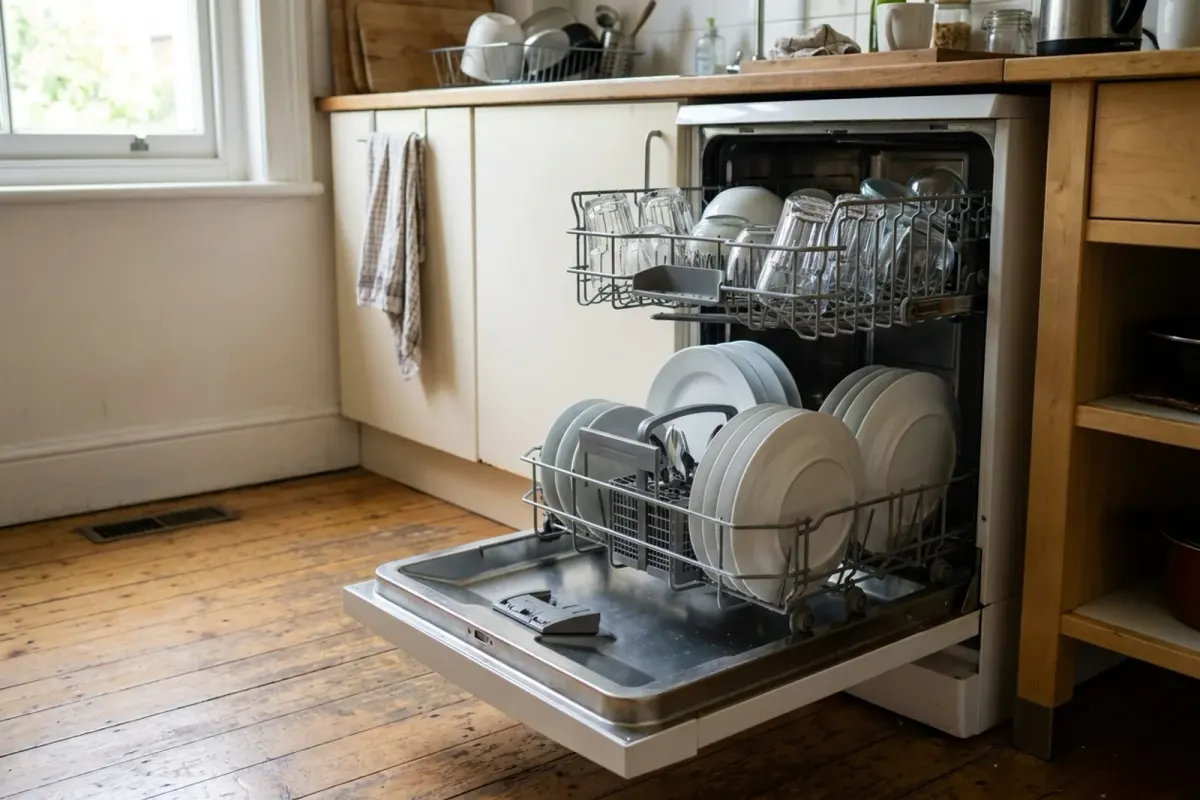
A knife hidden under soapy water is a hazard for whoever reaches in next, and soaking is bad for both blade and handle. Cooks wipe or wash their knife as soon as they're done, dry it, and put it back in its place.
They respect the knife's space
In a busy kitchen, a knife never sits near the edge of the counter or hidden under a towel. If it falls, nobody tries to catch it: everyone just steps back. That's a habit worth copying at home too.
Try this tonight
- Put a damp paper towel under your board.
- Give your chef's knife a few strokes on a honing steel.
- Practise the claw grip on one onion, slowly.
- Scrape with the spine, not the edge.
- Wash and dry the knife as soon as you're done.
Five small changes, and chopping dinner will feel safer and quicker within a week.
Spotted a mistake? Tell us and we’ll fix it.