Why You Sleep Worse the First Night Somewhere New
Hotel, guest room or holiday rental: the first night is almost always the worst. It isn't the mattress. Part of your brain is quietly keeping watch.
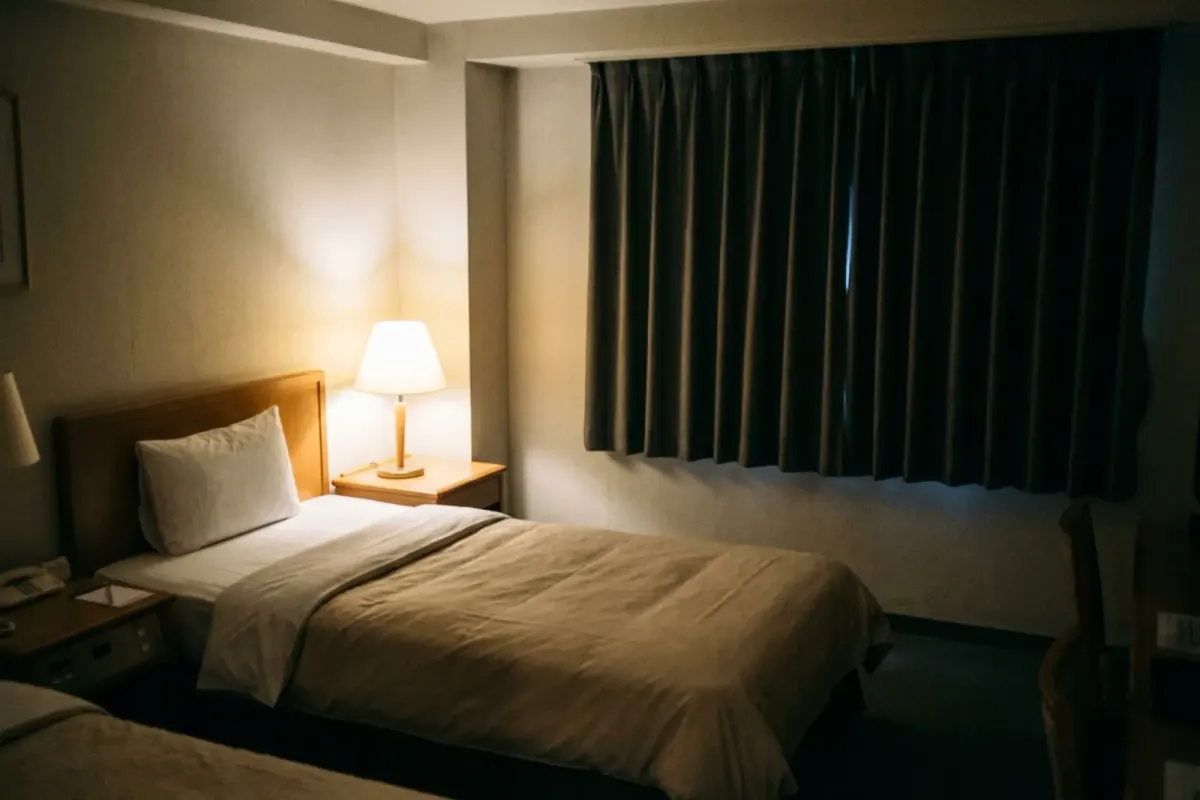
You arrive tired, the bed looks great, and you still lie awake far longer than you would at home. Then the second night is fine. If that sounds familiar, you're not imagining it. Sleep scientists have a name for it: the first-night effect.
Half of your brain stays on guard
Sleep researchers know it well: volunteers in sleep labs sleep noticeably worse on their first night there. It's so reliable that studies usually begin with an "adaptation night" to get it out of the way.
A 2016 study from Brown University looked more closely. It found that on the first night in a new place, one side of the brain (the left, in that study) stays more awake than the other during deep sleep. That more alert half reacted more strongly to irregular sounds: people were more likely to wake up when they heard them, and quicker to respond once awake. In other words, part of your brain is acting as a night watchman.
It's not a malfunction. Some marine mammals do something similar, resting one half of the brain while the other stays alert. In an unfamiliar place, a light, watchful sleep once made a lot of sense.
What makes it worse
- Unfamiliar noises. A humming minibar, an elevator down the hall, traffic in a different rhythm. Your watchful half notices each one.
- Light. Gaps in the curtains, a glowing smoke detector, a standby light on the TV.
- Temperature. Hotel rooms are often warmer than most of us sleep best in.
- A different routine. Late dinners, different bedtimes and screens in bed all add up.
How to make the first night easier
You can't switch off the night watchman, but you can give it less to react to.
Bring a little of home with you. Your own pillowcase, a familiar scent or your usual bedtime routine all make a strange room feel less strange.
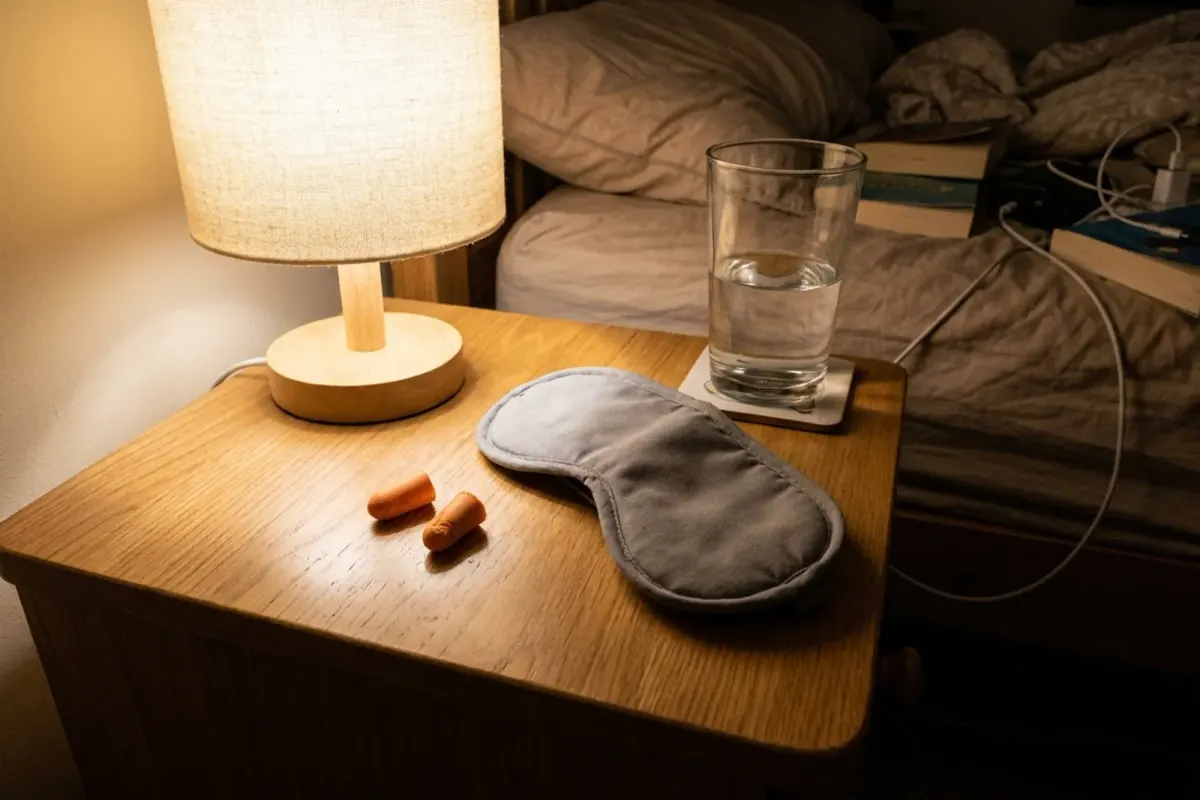
Block out sound. Foam earplugs or a white-noise app cover the small, sudden noises that set off the alert half of your brain.
Make the room dark. An eye mask is the simplest fix. A clothespin or binder clip can close the gap in hotel curtains.
Cool it down. Most people sleep best in a cool room, around 65 to 68°F (18 to 20°C). Turn the thermostat down when you arrive, not at bedtime.
Book the right room if you can. Ask for one away from the elevator, the ice machine and the street.
Keep your normal bedtime. The closer your evening is to a normal one at home, the faster your brain decides the new place is safe.
The good news
The effect is mostly a first-night thing, which is why sleep labs only need that one adaptation night. Your brain learns the place, decides it's safe, and lets both halves rest.
Sources
- Brown University. News release on the first-night effect study. 2016.
- Tamaki M, Bang JW, Watanabe T, Sasaki Y. Night Watch in One Brain Hemisphere during Sleep Associated with the First-Night Effect in Humans. Current Biology. 2016;26(9):1190-1194.
- Sleep Foundation. Best Temperature for Sleep.
Spotted a mistake? Tell us and we’ll fix it.