The Weird History of Everyday Things: Pillows, Forks, Flat Sheets
Stone headrests, a fork that caused a scandal, and the top sheet that half the world refuses to use. The things in your home have stranger stories than you'd think.
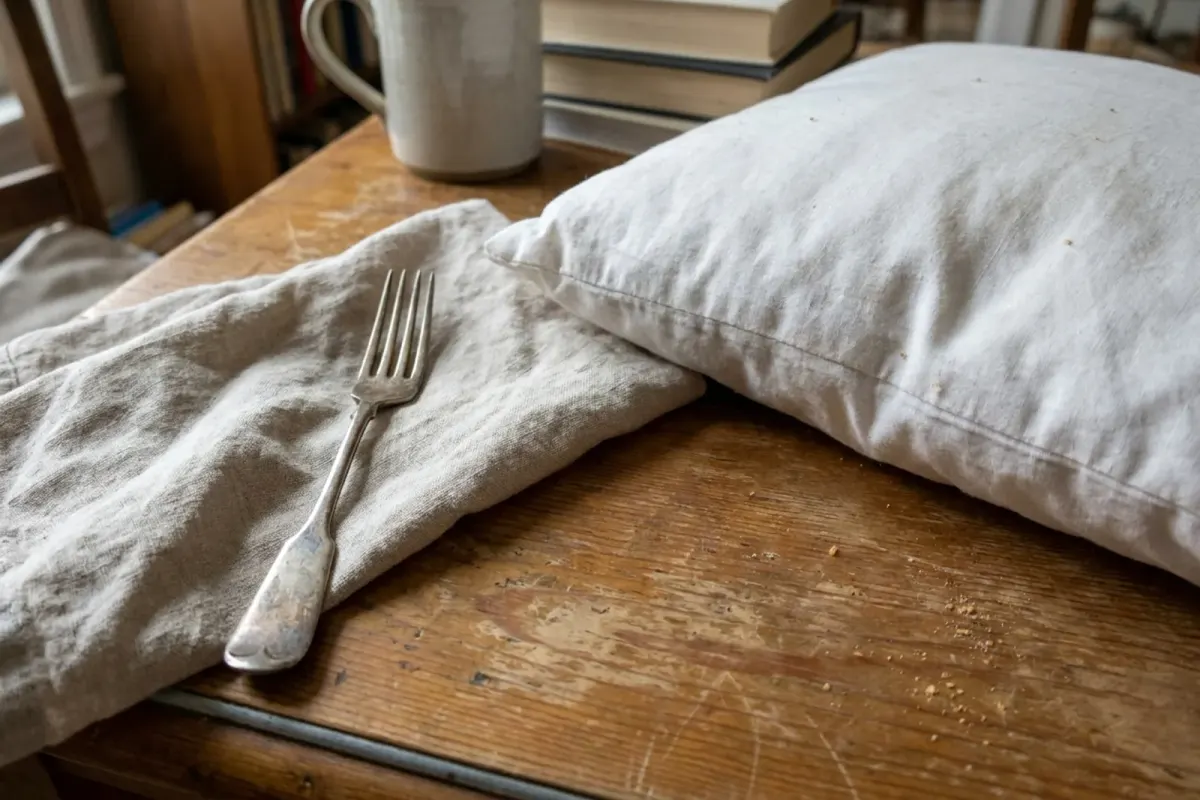
We use them every day without a second thought. But pillows, forks and flat sheets each took a long and surprising route to get into our homes.
Pillows: from stone to feathers
Some of the earliest known pillows were made of stone. In ancient Mesopotamia, people rested their heads on carved stone. The point seems to have been to keep the head off the ground, away from insects, rather than comfort.
In ancient Egypt, headrests were often carved from wood or stone and shaped like a curved stand, supporting the neck rather than cushioning the head. Some were placed in tombs to support the head in the afterlife.
In ancient China, hard pillows made from ceramic, jade, wood or bronze were common for centuries. Ceramic pillows were sometimes beautifully painted, and some people believed hard pillows were better for health than soft ones.
Soft pillows stuffed with straw, feathers or wool became common in Europe over the centuries, but for a long time they were a sign of comfort and wealth. Today, a fluffy pillow is something almost everyone takes for granted.
Forks: the scandalous utensil
Knives and spoons are ancient. The table fork is the newcomer, and it wasn't welcomed.
A famous story from the 11th century tells of a Byzantine princess who married into a noble Venetian family and ate with a small golden fork instead of her fingers. To some churchmen of the time, this was shockingly fussy, even sinful. When she later died of illness, one wrote that it was punishment for her vanity.
Forks slowly caught on in Italy over the following centuries. In England, they were still considered odd in the early 1600s. The traveller Thomas Coryat described the Italian fork habit in a book of his travels and was mocked for using one back home.
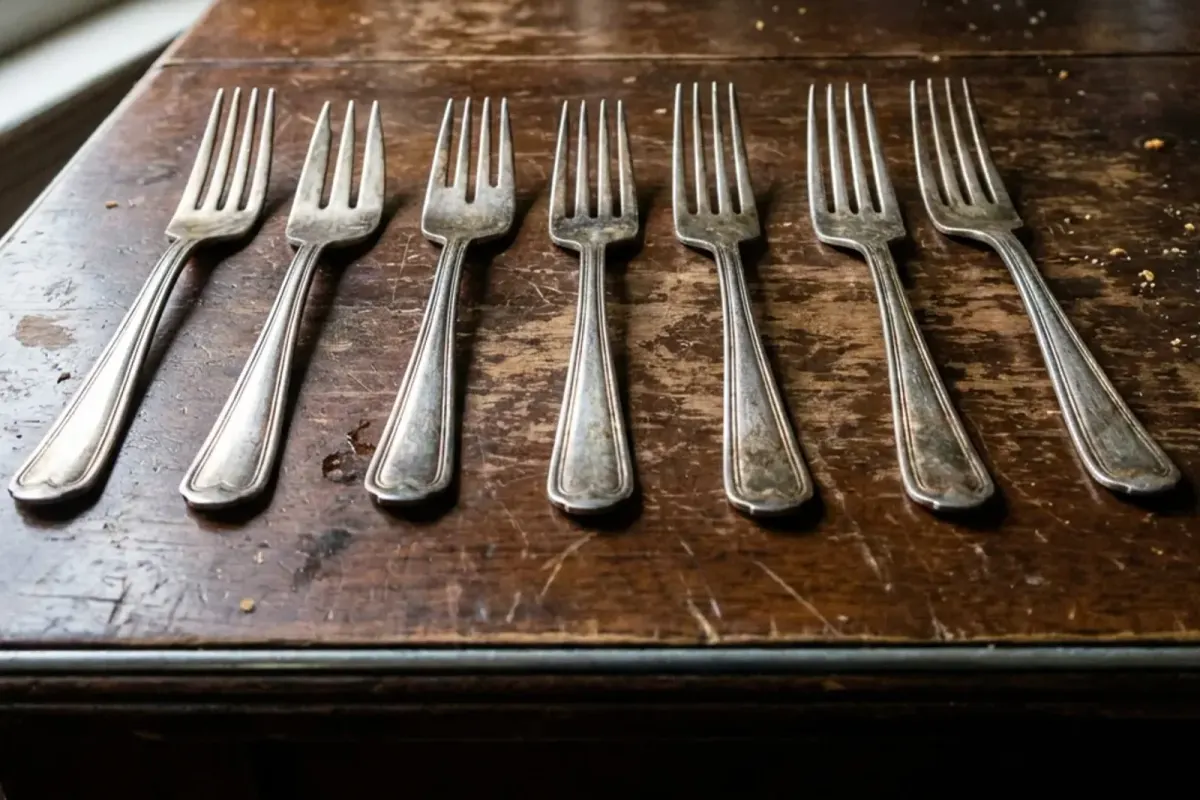
It took until the 1700s for forks to become normal on tables across much of Europe, and they were often two-pronged. The curved, four-pronged fork we know came later.
Flat sheets: the great divide
For most of history, a "sheet" simply meant a flat piece of fabric. You tucked it in as best you could.
The fitted sheet, with elastic corners that grip the mattress, only became widespread in the mid-20th century. It solved the eternal problem of a bottom sheet that came loose and bunched up at night.
The flat top sheet, the layer between you and your blanket or duvet, is where the world disagrees. In much of North America, a top sheet is standard, and a bed without one feels unfinished to many people. In much of Europe, many people sleep with just a fitted sheet and a duvet in a washable cover, and see the top sheet as an unnecessary layer that ends up tangled at the foot of the bed.
Both sides have a point. The top sheet is easy to wash and keeps the blanket clean. The duvet cover does the same job in one piece.
The thread that connects them
Each of these objects started as a luxury or an oddity: stone headrests for the few, a fork that looked like vanity, a sheet that fit. Over time, comfort won. Next time you go to bed, you'll be resting on a few thousand years of history.
Spotted a mistake? Tell us and we’ll fix it.