Why Your Feet Hurt More After 30
You didn't do anything different, but suddenly a day on your feet hurts more than it used to. Your feet change with age in ways most of us never hear about.
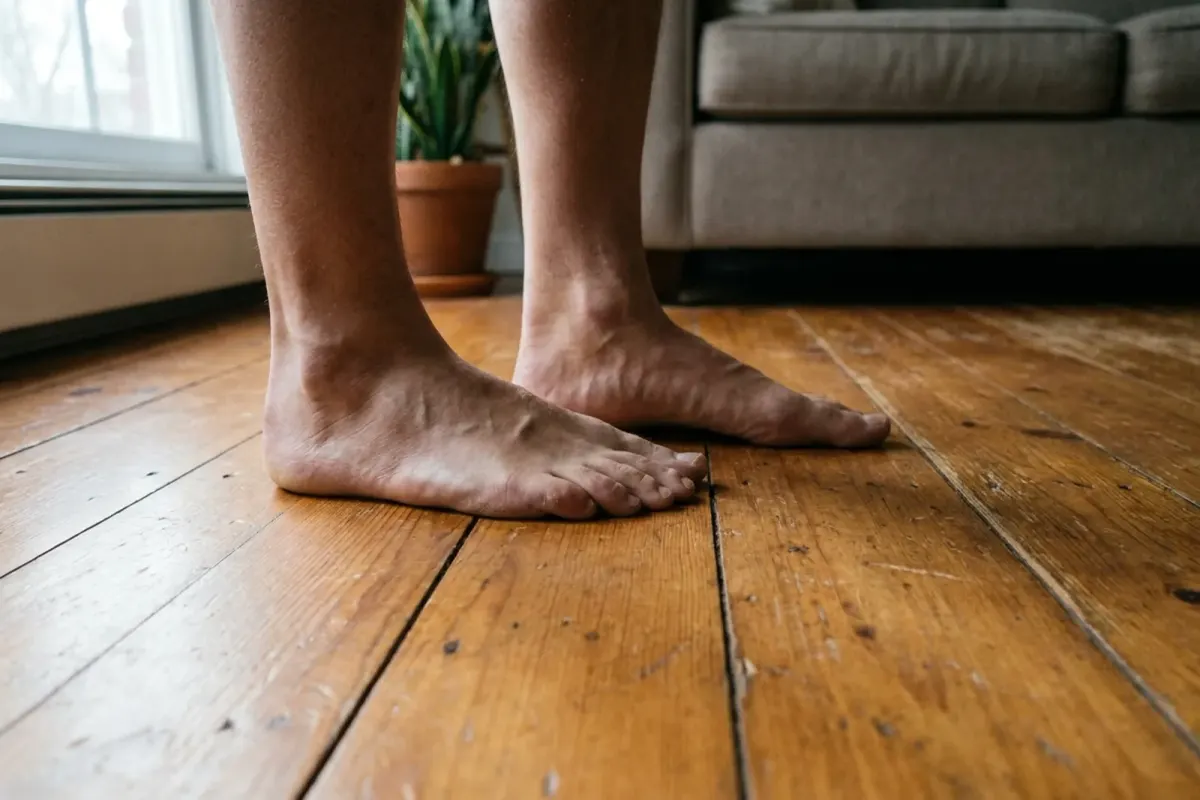
In your twenties, you could wear almost any shoes all day and forget about your feet. A few years later, the same shoes leave you aching by the evening. That's common, and there are good reasons for it.
What changes in your feet
The natural cushioning thins
Under your heel and the ball of your foot are pads of fat that act like built-in shock absorbers. With age, these pads tend to get thinner and less springy. Less cushioning means more pressure on the bones and joints with every step.
Arches can flatten a little
The ligaments and tendons that hold up your arches gradually lose some of their elasticity. For many people, the arch drops slightly over the years, and feet can even get a little longer or wider. That's why shoes that fit perfectly at 25 may not at 40. Pregnancy can also change foot size.
Tendons get stiffer
The Achilles tendon and the thick band under your foot, the plantar fascia, become less flexible with age. Tight calves add to the strain. This is one reason heel pain becomes more common in midlife.
Daily wear adds up
Years of standing, walking, sport and fashionable but unsupportive shoes all leave their mark. Changes in weight also put more load on the feet.
Common problems that start to show up
- Plantar fasciitis: a stabbing heel pain, often worst with the first steps in the morning
- Metatarsalgia: pain under the ball of the foot, often linked to thinning cushioning
- Bunions: a bony bump at the base of the big toe, which can run in families and be worsened by narrow shoes
- Achilles pain: stiffness or soreness at the back of the heel
What actually helps
Get your feet measured. Feet change. Have them measured again, later in the day when they're at their largest, and buy for the bigger foot.
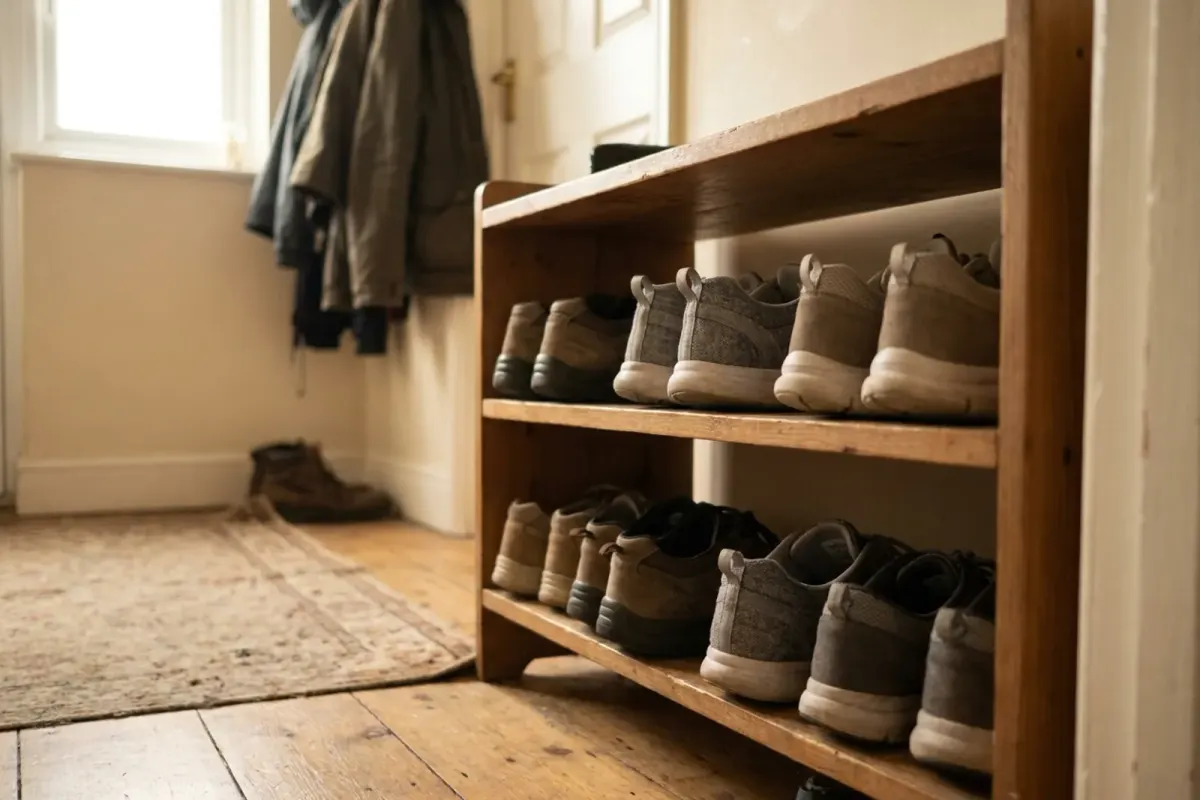
Choose supportive shoes for long days. Look for cushioning under the heel and ball, a firm heel counter and room for your toes. Save thin flats and very high heels for shorter outings.
Don't live in worn-out shoes. The cushioning in sneakers and everyday shoes breaks down with use, even if the outside still looks fine.
Stretch your calves. A simple wall stretch, held for 30 seconds a few times a day, can ease strain on the heel and arch.
Strengthen your feet. Picking up a towel with your toes or rolling your foot over a ball works the small muscles that support the arch.
Rotate your shoes. Alternating pairs gives the cushioning time to recover.
Mind your weight. Every extra pound is carried by your feet thousands of times a day.
When to see a professional
See a doctor or podiatrist if pain lasts more than a few weeks, keeps you from walking normally, or comes with swelling, numbness, tingling or changes in skin color. People with diabetes should have their feet checked regularly, as foot problems can be serious and easy to miss.
Your feet carry you through every day. A little attention now pays off for decades.
Sources
- Harvard Health Publishing. Why your feet get bigger as you age.
- Harvard Health Publishing. Soleful aging. 2024.
- American Academy of Orthopaedic Surgeons. Footwear Guide. OrthoInfo.
- NIH News in Health. Focus on Your Feet! 2023.
- Centers for Disease Control and Prevention. Your Feet and Diabetes.
Spotted a mistake? Tell us and we’ll fix it.